


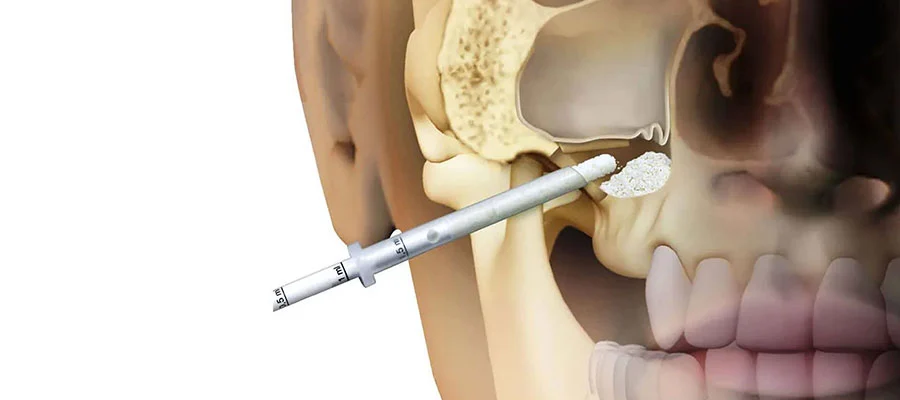
Sinus lifting is a bone augmentation procedure performed when bone height is insufficient in the upper jaw back region while planning an implant. In the upper jaw, sinus cavities can enlarge over time, and bone volume can decrease after tooth extractions. In this situation, there may not be enough bone area for the implant to be placed safely. With sinus lifting, the sinus floor is carefully raised in a controlled way, and bone support is added to create a stronger foundation for the implant.
The treatment process starts with an examination and imaging. The structure of the sinus area, the amount of bone, and the implant plan are evaluated. In some cases, the implant can be placed in the same session, while in other cases bone healing is awaited. With regular follow-ups and proper oral care, the process progresses in a safer and more predictable way.
What Is Sinus Lifting?
Sinus lifting is a surgical procedure applied for patients who have insufficient bone volume in the back regions of the upper jaw. With this method, the maxillary sinus membrane is lifted upward and bone graft material is placed underneath to create enough bone for an implant. Especially in individuals who have had missing teeth for a long time, jawbone resorption can occur. In this case, sinus lifting becomes a key condition for a successful implant procedure.
We build the necessary foundation before implants and plan your treatment process completely. To get information and learn whether you are suitable, you can get guidance from us.
Why Is Sinus Lifting Done?
After the loss of molar teeth in the upper jaw, bone tissue can gradually resorb and sinus cavities can expand. In this situation, placing an implant becomes risky. The sinus lifting procedure increases the bone height in this region and makes it suitable for implant treatment. If this surgical procedure is not performed in individuals with insufficient bone, the implant may not integrate properly, or unwanted complications may occur.
To perform healthy and long-lasting implant treatments safely, we complete the necessary preparations. You can contact us to evaluate the process.
How Is Sinus Lifting Done?
Sinus lifting is performed under local anesthesia, and patient comfort is prioritized. The dentist creates a small window in the upper jawbone and gently lifts the sinus membrane upward. Bone powder or graft material is placed into the created space, so that over time this area fills with new bone tissue. After the healing process is completed, implant treatment can be carried out safely. In some cases, sinus lifting and the implant can be done in the same session.
We manage the surgical process with care and create treatment plans tailored to you. You can reach us for detailed information before the procedure.
Who Is Sinus Lifting Suitable For?
Sinus lifting is especially recommended for patients who have insufficient bone volume in the back region of the upper jaw. Individuals who have had missing teeth for a long time, have bone loss, and are planned for implants are suitable candidates for this procedure. Also, in patients whose sinus cavities are anatomically very low, sinus lifting may be necessary. Any individual with good general health can be a candidate for this treatment.
We perform a detailed examination to evaluate suitability and offer solutions based on need. You can get information from us about treatment options that fit you.
What Are the Types of Sinus Lifting?
Sinus lifting is performed with two different methods: open and closed. The open sinus lifting method is preferred when bone height is very low and a wider surgical area is created. Closed sinus lifting is a less invasive method and can usually be performed in the same session as the implant. Which method is used is determined by the patient’s bone structure and the clinical situation.
To choose the most suitable method, we carry out detailed analyses and aim for safe and effective results. You can contact us to create your treatment plan.
Healing Process After Sinus Lifting
The healing process after sinus lifting usually ranges from 4 to 6 months. During this period, new bone formation is expected. In the first days, mild swelling, nasal congestion, or sensitivity may occur. The patient is given specific recommendations about nasal care and oral hygiene. After healing is complete, implant treatment begins. Patients are followed closely throughout the process.
We stay with you at every stage and support you for a fast and comfortable recovery. For all your questions, you can get guidance from us.
Sinus Lifting Risks and Complications
Since sinus lifting is a surgical procedure, it can carry some risks, as with any surgery. These risks include tearing of the sinus membrane, infection, swelling, pain, and rarely, delays in implant placement. However, performing the procedure in a sterile environment by an experienced specialist significantly reduces the risk of complications. When post-treatment instructions are followed, the healing process is usually comfortable.
We provide a professional approach to minimize risks and plan a healthy treatment process. For detailed information about the process, you can get support from us.
Advantages of Getting Sinus Lifting
Sinus lifting opens the way for implant treatment in individuals with insufficient bone by strengthening the jawbone and making long-lasting implants possible. This allows for natural-looking and functional teeth. In addition, because jawbone support increases, facial aesthetics can also be affected positively. The biggest advantage is that the chance of achieving fixed, comfortable, and strong teeth increases.
We take the right step together for a healthy smile. For lasting solutions, you can get pricing from us and create an examination plan.
The Relationship Between Sinus Lifting and Implant Treatment
Sufficient bone tissue is essential for implant treatment. Especially if bone volume has decreased in the back regions of the upper jaw, sinus lifting is performed to strengthen this area. This supports successful implant placement and long-term healthy use. Sinus lifting is one of the most important preparation steps that strengthens the foundation of implant treatment.
We plan the implant process completely and organize all necessary preparations for you. You can contact us to evaluate treatment options tailored to you.
What Should Be Considered After Sinus Lifting?
The first few days after the procedure are especially important. During nasal cleaning, pressure should not be applied, and it is recommended to keep the mouth open while sneezing. Oral hygiene should be maintained carefully, and prescribed antibiotics and recommended painkillers should be used regularly. In the first days, very hot foods and drinks should be avoided, and smoking should be strictly avoided. It is also recommended to temporarily avoid heavy exercise.
We explain step by step what you should pay attention to during healing and provide full support for a comfortable process.
What to Know Before Getting Sinus Lifting
Before starting the procedure, a detailed panoramic X-ray or 3D tomography is taken to analyze the sinuses and bone structure. The condition of the sinus cavities, your general health history, and any allergic conditions are carefully evaluated. In addition, all details you need to follow after the procedure are explained in advance. This treatment may not be suitable for every patient, so the clinician’s evaluation is very important.
We plan based on your personal health condition and explain the entire process transparently. Before starting treatment, you can ask us all your questions.
Sinus Lifting Prices 2026
Sinus lifting prices in 2026 may vary depending on the graft material used, the technique (open or closed), the clinician’s expertise, and the clinic’s equipment. Also, since in some cases implants can be placed together with sinus lifting, the total cost is determined according to the treatment plan. For a clear price, you need an examination and evaluation of your X-ray images.
We offer affordable and high-quality solutions and prepare the most suitable treatment plan for you. To learn current 2026 sinus lifting prices, you can get pricing from us and receive detailed information.
Frequently Asked Questions
Is sinus lifting a painful procedure?
Because sinus lifting is usually done with local anesthesia, significant pain is not expected during the procedure. In the first days after the procedure, aching, pressure feeling, and sensitivity may occur. These complaints are usually controlled with prescribed medications and decrease day by day. If there is severe pain, increasing swelling, or bad smell, a check-up is needed.
How long does swelling last after sinus lifting?
Swelling is more noticeable in most people during the first 2 to 3 days, then it gradually decreases. In some cases, bruising may also appear. The scope of the procedure, whether an open or closed technique was used, and the person’s healing speed affect the duration. If swelling continues to increase or signs such as fever appear, an examination is recommended.
Can an implant be placed on the same day?
In some cases, an implant can be placed on the same day. The deciding factor is the existing bone amount and whether the implant can achieve enough stability at placement. If bone height is very low, sinus lifting is done first and the implant is planned after healing. The most accurate decision is made after imaging and measurements.
Can you travel by plane after sinus lifting?
Air travel can cause discomfort in the early period due to pressure changes. For this reason, clinician advice is important, especially for the first days. Depending on the scope of the procedure, a short postponement may be recommended. If there is a required flight plan, it should be shared before the procedure.
Is open sinus lifting or closed sinus lifting better?
The “better” technique depends on bone height. Closed sinus lifting can be preferred when bone deficiency is more limited and is usually planned in the same session as the implant. Open sinus lifting is applied when bone height is lower and aims for a larger bone increase. Which technique is suitable becomes clear with tomography measurements.
What happens if sinus lifting fails?
Although failure is rare, it is possible. Causes may include infection, tearing of the sinus membrane, healing not progressing as expected, or the graft material not integrating sufficiently. In such a case, the area is treated and, if needed, bone augmentation may be planned again. The process is reorganized based on examination and imaging.
Does smoking affect sinus lifting?
Yes, smoking can negatively affect healing. It can increase infection risk by reducing tissue blood supply and slow down bone healing. This can reduce success after sinus lifting. If possible, taking a break or reducing smoking supports healing.
Is nosebleeding normal after sinus lifting?
Mild bleeding or blood-tinged nasal discharge can be seen, especially in the first days. However, heavy bleeding, clotting, or prolonged bleeding is not considered normal. Also, if complaints such as bad smell, fever, or increasing pain are present, a check-up is needed. Following post-procedure instructions reduces bleeding risk.
Does every implant patient need sinus lifting?
No, it is not needed for everyone. Sinus lifting is considered only when bone height is insufficient for implants in the back region of the upper jaw. If bone volume is sufficient, implants can be planned directly. The need is determined by X-ray or tomography measurements.
What should be done if the implant does not integrate after sinus lifting?
If the implant does not integrate, the cause is evaluated first. Infection, insufficient bone integration, early loading, or factors such as smoking can play a role. If the implant is removed, the area is healed and a new implant can be planned at the right time. In some cases, additional bone support or a different implant plan may be needed.