


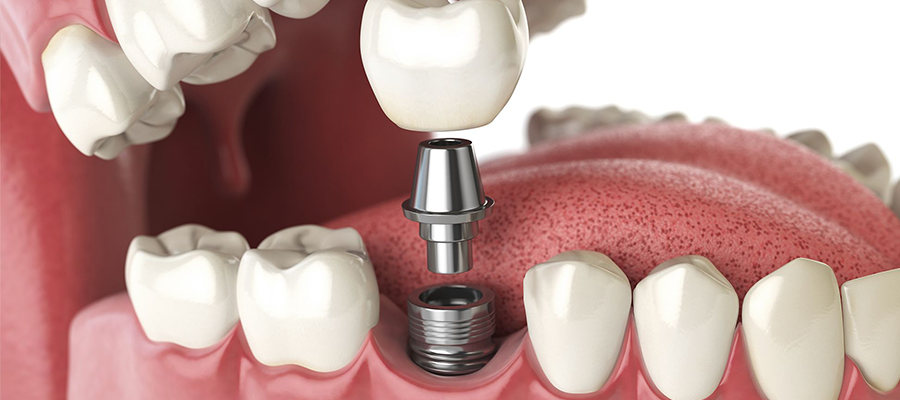
Implant treatment is the replacement of a missing tooth by placing an artificial root into the jawbone and building a new tooth on it. The goal is to restore chewing strength and reduce the aesthetic loss caused by the gap. It can be planned for different situations, from a single missing tooth to multiple tooth loss. Porcelain crowns or bridge-like restorations can be made on the implant to achieve a look close to a natural tooth.
The treatment process starts with an examination, X-ray evaluation, and measuring the bone structure. If the jawbone condition is suitable, the implant is placed and the final tooth is completed after the healing period. In some cases, additional procedures may be needed for bone support. Regular oral care and follow-up visits help the implant stay healthy for a long time.
What Is Implant Treatment?
Implant treatment is the placement of a titanium screw (artificial root) into the jawbone to replace a missing tooth, followed by building a new tooth on it. The goal is to achieve chewing strength and an appearance close to a natural tooth. For a single missing tooth, one implant can be used; for multiple missing teeth, implant-supported bridge or fixed prosthesis options can be planned.
An implant helps complete the gap without cutting the neighboring teeth. The success of the treatment depends on factors such as bone structure, oral care, bite balance, and regular check-ups. With correct planning, implants can be used for many years.
How Is Implant Treatment Done?
Implant treatment is the procedure of placing an artificial root into the jawbone where the tooth is missing and then making a new tooth on it. The process starts with an examination and X-ray; bone structure, gum health, and the bite are evaluated. After an appropriate plan is made, local anesthesia is applied and the implant is placed in the chosen area. After the procedure, a healing period is needed for the implant to attach firmly to the bone.
When healing is complete, a connector part is attached to the implant and impressions are taken. Then an implant crown or bridge is prepared and fitted. In some cases, if the bone is insufficient, additional procedures such as bone graft material, sinus lift, or gum reshaping may be planned. For long-term results, regular oral care, follow-up appointments, and managing habits like teeth grinding are important.
Why Is Implant Treatment Done?
Implant treatment is done to reduce chewing and speech problems caused by missing teeth, protect the balance inside the mouth, and restore aesthetics. If the tooth gap remains for a long time, neighboring teeth can shift into the space, the opposing tooth can over-erupt, and chewing balance can be disrupted. Over time, this can increase joint and gum problems.
Key reasons for choosing implants include:
➤Completing the gap without procedures on neighboring teeth
➤A fixed option with a chewing feel close to natural teeth
➤An alternative to bridges and removable dentures
➤Helping reduce tooth shifting related to the gap
➤Supporting the aesthetic appearance
Who Is Suitable for Dental Implants?
Dental implants can be planned for people whose jawbone can support an implant and whose overall oral health is suitable. Suitability is not only related to age, but also to bone structure, gum health, and habits. For this reason, the decision is made after an examination and imaging.
General suitability criteria include:
➤Sufficient jawbone volume (additional procedures can be planned if needed)
➤Gum disease being under control
➤Evaluation of conditions that may affect healing
➤Regular oral care
➤Considering smoking within the treatment plan
In some people, the process may require closer follow-up:
➤Conditions that can affect healing, such as uncontrolled diabetes
➤Advanced gum problems
➤Teeth grinding and clenching habits
➤Heavy smoking
These situations do not always prevent implants, but planning and care are carried out more carefully.
What Are the Stages of Implant Treatment?
Implant treatment is a step-by-step process that starts with examination and planning and continues until the final tooth is completed. In the first stage, gum health, jawbone volume, and the bite are evaluated. If needed, 3D imaging is used to clarify the implant location and size. This plan forms the basis of the treatment in terms of both aesthetics and chewing strength.
During the procedure stage, the implant is placed into the jawbone and the healing process is monitored. After the implant integrates with the bone, impressions are taken and the restoration is prepared. In the final stage, the bite is checked and the health of the tissues around the implant is monitored through regular visits. In some cases, additional procedures such as bone support or gum reshaping may also be included in the plan.
How Long Does Implant Treatment Take?
The total duration of implant treatment varies depending on the jawbone condition and whether additional procedures are needed. Although placing the implant usually takes a short time, the main factor is the healing period required for the implant to attach firmly to the bone. Placing the final tooth before this period is complete may not always be appropriate.
Factors that affect the timeline include the timing of tooth extraction, bone density, anatomical conditions such as the sinus area, and gum health. A single-tooth plan may progress faster, while cases with multiple missing teeth or required bone support may take longer. The clearest timeline is determined after examination and imaging, based on the plan.
What Are the Types of Implants?
Implant types can vary depending on the intended use and the planned restoration. The clinician’s choice is made according to bone structure, the number of missing teeth, and chewing load.
➤Root form (screw type) implants
➤Narrow diameter implants (if the bone area is limited)
➤Single tooth implant (for one missing tooth)
➤Implant-supported bridge (for several missing teeth)
➤Full-arch fixed implant plans (such as All-on-4, All-on-6)
➤Restoration options: screw-retained fixed teeth, cement-retained fixed teeth
Advantages and Disadvantages of Implant Treatment
Implant treatment aims to replace a missing tooth in a fixed way and, with correct planning, can provide long-term use. Completing the gap without working on neighboring teeth makes implants a frequently chosen option. Supporting chewing strength and preserving aesthetics are also important benefits.
Advantages
➤The gap can be completed without cutting neighboring teeth
➤Provides fixed use and a chewing feel close to natural teeth
➤Helps reduce tooth shifting related to the gap
➤Supports the aesthetic appearance
➤Can be used long-term with regular care
Disadvantages
The healing process is an important stage in implant treatment, and the timeline may extend in some cases. If the bone is insufficient, additional procedures may be needed. Also, if oral care is not adequate, the risk of problems around the implant increases. Factors such as smoking, teeth grinding, and missing follow-up visits can also affect long-term success.
What to Consider After Implant Treatment
➤Do not eat until numbness wears off, there is a risk of biting the lip and cheek.
➤Avoid hot food and drinks, hard foods, and alcohol in the first 24 hours.
➤Avoid spitting, drinking with a straw, and strong gargling on the first day.
➤Use the medications prescribed as instructed.
➤Reduce heavy exercise and strain for the first 48 hours; keeping the head slightly elevated can help.
➤Try not to chew on the implant side in the first days.
➤Smoking makes healing harder, take a break if possible.
➤Do not neglect oral care; brushing should be gentle and the stitch area should not be traumatized.
➤If swelling increases, or there is bad taste or smell, severe pain, or bleeding, plan a check-up.
➤Do not skip follow-up visits; bite and healing are monitored.
Are There Risks in Implant Treatment?
There are risks in implant treatment, but with correct planning and good care, most risks can be kept under control. The most common issues are pain and swelling in the first days, sensitivity in the stitch area, and rarely prolonged bleeding. During healing, infection around the implant or the implant not attaching to the bone as expected are also possible risks.
Risk increases with poor oral care, heavy smoking, teeth grinding, and missing follow-up visits. For this reason, cleaning, nutrition, and regular check-ups are very important after treatment. If complaints increase over time, an examination should be done without delay.
Implant Treatment Success Rate
The success rate of implant treatment is generally high and long-term use is the goal. The most important factors are suitable bone structure, healthy gums, correct bite adjustment, and regular oral care. The correct design of the crown or bridge on the implant is also important for load distribution.
For long-lasting results in daily life, regular brushing, flossing or interdental brushes, and periodic check-ups are needed. If there is teeth grinding, a protective night guard plan can also be supportive. This helps protect the tissues around the implant and allows issues to be detected early.
Implant Treatment Prices 2026
Implant prices in 2026 are shaped by the number of implants, whether bone support is needed, the type of restoration used, and the scope of the treatment plan. A single tooth implant and full-arch fixed teeth plans are not evaluated within the same budget. Steps such as extraction, bone graft material, sinus procedures, or gum reshaping can also affect the total cost.
For the most accurate price information, a clear plan is created through an examination and the process is explained transparently from start to finish. During the planning stage, what is included, how many appointments are needed, and the restoration option become clear. For detailed information and a personalized plan about implant treatment, you can contact us.
Frequently Asked Questions
Is implant treatment painful?
Implant treatment is generally not painful during the procedure thanks to local anesthesia. With numbing, the patient may feel pressure but significant pain is not expected. In the first days after the procedure, sensitivity and mild aching can occur, and this is often part of the healing process.
Pain level can vary depending on the treated area, number of implants, and additional procedures. When the prescribed medications are used regularly, the process is usually more comfortable. If pain increases, or there is bad taste or smell, or swelling increases significantly, a check-up is needed.
Can everyone get implants?
Implants can be applied to many people with suitable jawbone and healthy gums. Suitability is not limited only to age; general health, oral care habits, and treatment compliance are also important. For this reason, the decision is made after examination and imaging.
In some cases, more careful planning is needed. Factors such as uncontrolled diabetes, heavy smoking, advanced gum disease, and teeth grinding can affect success. These do not always prevent implants, but follow-up and care are managed more strictly.
If the jawbone is insufficient, can an implant be done?
If the jawbone is insufficient, implants are not always completely ruled out. In many cases, additional procedures that provide bone support can prepare a suitable base for implants. The plan changes depending on the level of bone loss and the area.
Common options include bone graft material and sinus lift. In some situations, narrow diameter implants or different planning may also be considered. The best decision becomes clear after imaging and bone measurements.
How long does it take for an implant to fuse?
The time for an implant to integrate with the bone varies by the person and the area. Generally, within a few months, the implant adapts to the bone and the restoration stage begins. Since the bone structure in the upper jaw is different, the timeline may be planned longer for some people.
Factors that affect the timeline include bone density, smoking, oral care, and additional procedures. In some cases, a temporary tooth may be planned, but safe timing for the final restoration is determined according to the clinician’s plan.
Do implants last a lifetime?
Implants can be used for many years and, with good care, very long life is the goal. However, an approach like “lifetime guarantee” is not accurate, because the health of the gum and bone around the implant can change over time. Protecting the restoration on the implant and the surrounding tissues is as important as the implant itself.
Regular brushing, interdental cleaning, and follow-up visits directly affect implant lifespan. Smoking, teeth grinding, irregular care, and lack of follow-up increase risk. For this reason, care and regular monitoring are essential for long-term use.
How long do swelling and pain last after an implant?
Swelling and sensitivity can be more noticeable in the first 2 to 3 days after an implant. In most people, swelling starts to decrease within a few days. Pain is usually controlled with medication and becomes milder each day.
The duration depends on the treated area, number of implants, additional procedures such as bone support, and individual healing speed. If swelling keeps increasing, or fever or bad smell is present, an examination is needed.
Does smoking affect implant success?
Yes, smoking can negatively affect implant success. Smoking can slow tissue healing and increase the risk of inflammation around the implant. This can affect both the healing period and long-term success.
The first weeks are especially critical for healing. If possible, taking a break or reducing smoking is recommended. If smoking continues, more frequent and regular care and check-ups become more important.
Is an implant better or a bridge?
There is no single best choice between an implant and a bridge; the decision is made according to the condition in the mouth. An implant helps complete the gap without cutting neighboring teeth and provides fixed use. A bridge can be planned faster in some cases and may be a different option in terms of cost.
The decision depends on factors such as the condition of neighboring teeth, bone structure, number of missing teeth, and bite load. After examination, the pros and cons of both options are clarified and a decision is made.
Can an implant fall out?
It is rare for an implant to fall out, but in some cases the implant may not attach to the bone sufficiently. This usually occurs early, during the healing period. Infection, heavy smoking, excessive load, or bone quality can increase this risk.
In such a situation, the plan is reassessed. In some cases, after the area heals, an implant can be placed again. Regular follow-up and care help detect problems early.
When can you eat after implant treatment?
You should not eat until numbness wears off. When numb, the risk of biting the cheek and tongue increases. Choosing soft foods on the first day, avoiding hot foods and drinks, and not straining the implant area support healing.
Hard and sticky foods are not recommended in the first few days. If there are specific instructions, follow them. If bleeding, swelling, or pain increases, it is appropriate to plan a check-up.